Ancient Tradition · Northern Sky

The Pivot
of Heaven

For thousands of years, Chinese astronomers placed the celestial pole — and the seven stars rotating around it — at the centre of their understanding of heaven, earth, and time. This site is an attempt to present that tradition in English, as a complete and working system.

Subscribe to our free newsletter →
北極 Polaris

About This Project

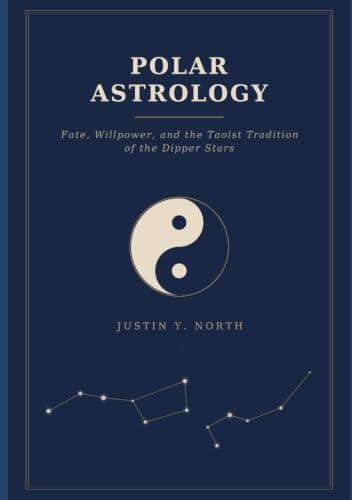
Polar Astrology

What Is Polar Astrology?

Most people who encounter Chinese astrology encounter the twelve zodiac animals and the five elements. Those who go deeper find the Four Pillars or Purple Star Astrology. But at the centre of the classical Chinese sky — literally, at the axis around which all stars revolve — stands something that most English-language accounts barely touch: the celestial pole and the seven stars of the Northern Dipper.

In classical Chinese astronomy, the celestial pole was not merely the point where the earth's axis meets the sky. It was 天極 — the pivot of heaven, the throne of the Celestial Emperor, the still point around which all motion organized itself. The Northern Dipper (北斗七星, the Seven Stars of the Northern Dipper) was the chariot of this emperor, rotating around the pole to point toward each of the four cardinal directions in turn, marking the seasons as it moved.

This is not supplementary folklore. The Records of the Grand Historian (Shǐ Jì) devotes an entire chapter — the Tiān Guān Shū — to celestial observation, and the Northern Dipper occupies a position of first importance. The Huainanzi opens its discussion of the cosmos with the pole. The connection between the Dipper's orientation and earthly events is treated as observable fact, not speculation.

Polar astrology — as I'm using the term — covers this tradition: the Dipper's seasonal rotation, the cosmological roles of its seven stars, and the system of temporal and directional reckoning built around the pole. It sits within the same classical Chinese framework as the Five Elements, Heavenly Stems, and Earthly Branches, but it's a part of that framework that has received almost no serious treatment in English.

I started this project because I couldn't find what I was looking for anywhere else.

The Seven Stars of the Northern Dipper · 北斗七星

Each of the seven stars has a classical Chinese name and a specific cosmological role. The four bowl stars correspond to heaven, earth, humanity, and time. The three handle stars to the three officers of the classical system. As the Dipper rotates around Polaris, the direction the handle points was read as a seasonal marker — governing the month, the ritual calendar, and agricultural timing.

#Chinese NamePinyinWestern NameMeaning
1天枢TiānshūDubheCelestial Pivot
2天璇TiānxuánMerakCelestial Transverse
3天玑TiānjīPhecdaCelestial Mechanism
4天权TiānquánMegrezCelestial Authority
5玉衡YùhéngAliothJade Balance
6开阳KāiyángMizarOpener of Yang
7摇光YáoguāngAlkaidFlickering Light

A Term Coined, Freely Given

Polar Astrology is a term I've coined to describe the ancient Chinese and Taoist tradition of celestial pole and Dipper star astrology for an English-speaking audience. While fragments of this tradition have appeared under various names — Big Dipper astrology, Dipper star astrology, Beidou — Polar Astrology aims to present these ancient techniques with the celestial and theoretical grounding they deserve, as a complete and coherent system rather than scattered references.

I believe this knowledge belongs to humanity, not to any individual. Scholars, practitioners, and enthusiasts are encouraged to use this term freely, teach these concepts, and build upon this work. I only ask that you honor the tradition's roots and credit the sources that guide your understanding.

— Justin North

What This Site Will Cover

This is where I work through that material in public — primarily through close reading of the classical sources rather than secondhand summaries.

Most articles deal with specific texts and techniques: what the Tiān Guān Shū records about the Dipper's seasonal rotation, how imperial astronomers read the pole, the relationship between Dipper timing and the Five Elements cycle. These questions don't have adequate treatment in English. That's the gap I'm trying to fill.

This site is a companion to Taoist Astrology, which covers the broader classical tradition. They share the same cosmological roots — if you're studying one, the other will make more sense.

An Invitation

Follow this work

I publish slowly and try to get things right. If the classical Chinese sky tradition is something you care about — whether you're coming from astrology, history, Taoism, or just curiosity — I'd be glad to have you along.

Free newsletter — no spam, unsubscribe anytime.